

Research explores whether ryegrass pastures could one day help reduce methane
Published: May 28, 2026
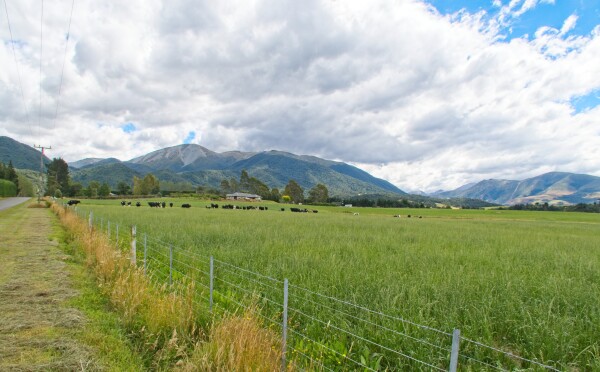
The Ag Emissions Centre has committed $5.46M to a three-year research programme exploring whether methane-reducing compounds could one day be delivered through pasture.
The programme brings together scientists from the New Zealand Bioeconomy Science Institute, the Ferrier Institute at Victoria University of Wellington, and the University of Canterbury, alongside commercialisation partner Grasslanz Technology.
Naomi Parker, Executive Director of the Ag Emissions Centre, said the investment is part of the Centre’s work to identify and explore methane mitigation approaches that work within New Zealand’s pasture-based farming systems.
“New Zealand farming systems are built around pasture, so it is important we investigate mitigation options that could directly integrate into those systems,” Parker said.
“This programme is early-stage research, and one example of the type of science we are supporting to build a pipeline of practical methane mitigation options for farmers.”
The research will investigate whether methane inhibitor compounds can be generated within Epichloë endophytes, which are naturally occurring fungal partners of perennial ryegrass, the most commonly used pasture plant on New Zealand farms.
If successful, this approach could create a new pathway for delivering methane mitigation through pasture renewal, allowing farmers to integrate emissions reductions into systems they already use.
The programme builds on earlier proof-of-concept work led by Professor Emily Parker at Victoria University of Wellington and Associate Professor Sarah Kessans at the University of Canterbury.
Scientists at the New Zealand Bioeconomy Science Institute will add to the team their expertise in methane inhibitor chemistry and ryegrass endophyte systems, including commercially proven strains.
As an early-stage research programme, the work will initially focus on laboratory development, strain optimisation, and validating the biochemical pathways. Further research, regulatory assessment, and field testing would be required before any commercial application could be considered.
Programme Manager John Caradus of Grasslanz Technology said the programme is exploring whether pasture itself could eventually play a role in methane mitigation.
“This programme is investigating whether methane mitigation could potentially be integrated through pasture systems farmers already use,” Caradus said.
“If successful, this approach could provide a new pathway for methane mitigation through pasture renewal rather than requiring additional inputs.”
The investment forms part of the Ag Emissions Centre’s wider portfolio of methane mitigation research, which is exploring multiple approaches to support the development of practical and cost-effective emissions reduction solutions for New Zealand farmers.
Published: May 28, 2026

